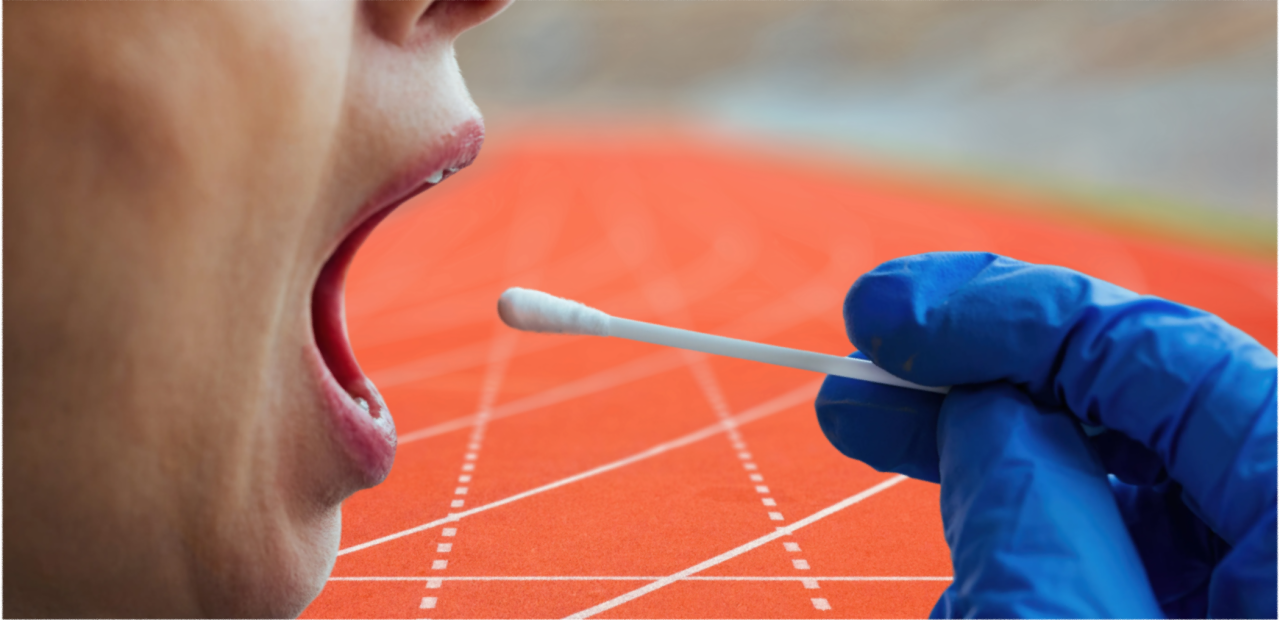
The cheek swab test used by the International Olympic Committee (IOC) to determine unfair advantages in performance has no scientific basis. Scientists told the Dutch investigative journalism platform Pointer (KRO-NCRV) that the test is not supported by scientific evidence. Using this test, anyone found to carry the male SRY gene will not be allowed to compete in the women’s category. As a result, trans women will be excluded from the Olympic Games starting in 2028.
The IOC claims that its policy is based on science, but according to a member of the IOC’s own Medical and Scientific Commission, which advises on athlete health and safety, the committee’s recommendations were bypassed. Instead, the IOC established a special working group while keeping the identities of its members confidential, says the commission member to Pointer.
The mandatory cheek swab test will be introduced at the 2028 Olympic Games.
SRY gene
In practice, this means that trans women will no longer be able to compete in women’s competitions. According to the IOC, trans women have an unfair performance advantage. A test for a specific male-associated gene is intended to determine an athlete’s sex. This is the SRY gene, which is located on the Y chromosome and initiates the development of male reproductive organs. These produce testosterone, which stimulates muscle growth. Men have higher levels of testosterone than women and retain them even after transition.
However, this method is not suitable for determining whether an athlete is conclusively a biological man or woman. The SRY gene may also be present in intersex individuals, for whom such a distinction is not clear. Furthermore, the buccal swab test does not answer the question of whether someone has an unfair sporting advantage or not.
This is evident from new research by the International Federation of Sports Medicine (FIMS), a key advisory body to the IOC, which is due to be published shortly and from which the results have been obtained by Pointer. The study concludes that the current approach treats all athletes as a single group. According to the researchers, the presence of SRY in the body says nothing about a potential performance advantage in sport.
‘Protecting the women’s category’
Earlier this year, IOC President Kirsty Coventry introduced the SRY test as a method for distinguishing between male and female athletes. At the time, Coventry said she was opting for a ‘scientific approach’ to ‘protect the women’s category’.
NOC*NSF does not support the cheek swab test
The Dutch Olympic Committee and Sports Federation (NOC*NSF) says it does not unconditionally support the IOC’s decision to introduce a mandatory cheek swab test. The umbrella organization states that it still has many questions and concerns regarding both the implementation and the consequences of the policy.
According to NOC*NSF, some physical performance advantages could potentially remain after transition, but whether this results in unequal competition must be evaluated sport by sport. NOC*NSF does support the IOC’s aim of protecting women’s competition at the Olympic level from any potential performance advantages that trans women may have.